
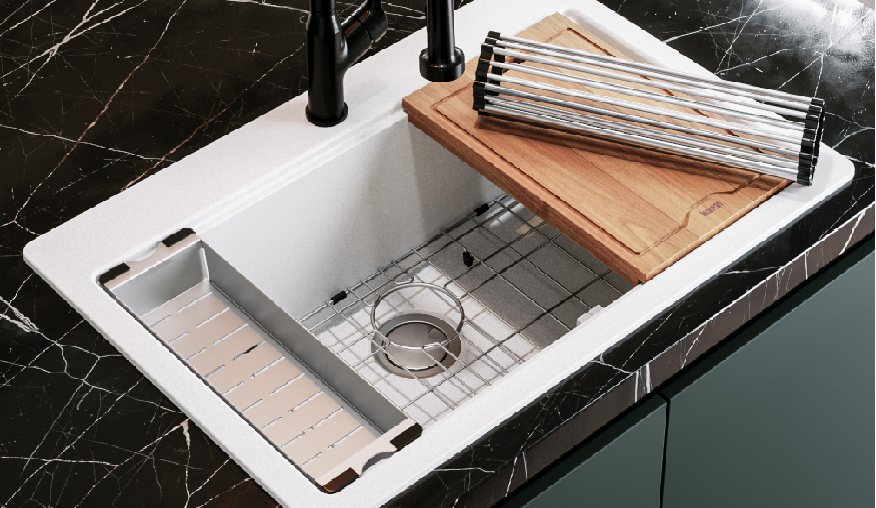
Stainless steel sinks are celebrated for their impressive durability and resistance to both stains and corrosion, making them perfect for bustling kitchens. Available in various gauges, 16-gauge sinks are heavy-duty while 18-gauge sinks cater to most kitchen needs.
Quartz sinks merge a modern aesthetic with practicality, incorporating natural stones and resins to create a distinct appearance. They’re also non-porous and easy to care for, with a broad spectrum of colors and textures providing customization in contemporary kitchen designs.
Fireclay sinks elegantly balance traditional craftsmanship and modern functionality. Their remarkable resistance to scratches, stains, and heat makes them ideal choices. Plus, with a glossy finish, cleaning becomes simpler and they add a touch of sophistication to any kitchen.
Top mount sinks are budget-friendly and easy to install, whereas undermount sinks deliver a sleek, seamless look that enhances the countertop style. Decisions between these options should take layout and personal choice into account.
Characterized by their deep basins, farmhouse sinks effortlessly accommodate large cookware while serving as captivating centerpieces in kitchen spaces. Their design promotes functionality, especially in settings frequented by families.
Acrylic sinks shine with their vibrant colors and lightweight nature, combining durability and ease of installation. They stand out as eco-friendly solutions, offering a range of colors that invite creative kitchen designs.
Finding the right faucet means aligning its style with that of the sink, while also considering functional features like pull-down sprayers. Popular modern trends feature black matte finishes and smart technology to enhance convenience.
Table of Contents
Discovering the Best Kitchen Sink Materials for Your Style
Stainless Steel Sinks: The Enduring Classic
Stainless steel sinks retain their reign in the market, and it’s easy to see why. They’re closely associated with strength and longevity. Kitchens can be hectic spaces, and the daily routine of cooking and cleaning demands a sink that withstands constant use. Known for its high resistance to stains and corrosion, stainless steel is an excellent choice for busy households.
This type of sink comes in various gauges, essentially measuring the thickness of the metal. A lower gauge signifies a thicker material. Heavy-duty 16-gauge sinks are popular, but 18-gauge still works well in most kitchens. Those looking for sound insulation might want to consider undercoated options that reduce noise during washing.
- Add a grid to protect the sink bottom.
- Opt for brushed finishes to achieve a modern, fingerprint-resistant look.
- Review different bowl configurations for added versatility.
Why Choose Quartz for a Modern Aesthetic?
Quartz sinks have carved out their own niche in kitchen design, capturing the attention of those who love a contemporary look. By blending natural stones and resins, they offer a one-of-a-kind appearance, while ensuring durability and strength. A great advantage? The availability of numerous colors and textures caters to various design themes.
Think of quartz sinks and countertops as complementary design features. They can create a harmonious flow in both modern and minimalist kitchens. Surprisingly, maintenance isn’t cumbersome; often, a simple wipe is all that’s needed to keep them sparkling clean. Sink manufacturers assert that quartz’s non-porous nature resists stains from coffee and red wine.
- Look for vibrant colors that coordinate with cabinetry.
- Align textures with the countertop for a cohesive appearance.
- Evaluate installation types for a unified effect.
Fireclay Sinks: Merging Functionality with Timeless Design
Fireclay sinks represent a beautiful blend of historical craftsmanship and modern utility. Made from clay and fired at high temperatures, these sinks boast a classic charm that appeals to sophisticated tastes. Their exceptional resistance to scratches, stains, and heat makes them must-haves in any kitchen.
Not only do they possess visual appeal; fireclay sinks maximize durability. The glossy finish simplifies cleaning, making what could be a tedious task rather straightforward. Moreover, they add an element of uniqueness to kitchen spaces, enhancing chic, rustic designs.
- Choose striking colors to make a bold statement.
- Consider apron-front styles for a classic vibe.
- Pair with vintage fixtures for added allure.
Exploring Sink Styles – Which One Fits Your Space?
Top Mount vs. Undermount: Pros and Cons Explained
Deciding between top mount and undermount sinks isn’t just about preference; it greatly hinges on kitchen layout and usage patterns. Top mount sinks, or drop-in sinks, are a cinch to install, perfect for DIY fans. They feature a visible lip, allowing for various countertop styles.
Conversely, undermount sinks have surged in popularity within contemporary kitchen designs due to their sleek look. With edges blending seamlessly between sink and countertop, they offer a cleaner, more refined choice. However, they often necessitate professional installation, which adds to complexity.
“Aesthetic choice meets functionality; choosing the right sink style changes the entire kitchen experience.”
- Top mount sinks tend to be more budget-friendly and easier to replace.
- Undermount sinks provide a modern look and ease in cleaning.
- Account for countertop material and durability as part of the decision-making process.
The Allure of Farmhouse Sinks: A Statement Piece
Farmhouse sinks epitomize the fusion of utility and aesthetics. With their deep basins, they manage large pots and pans without a hitch, making them essential for passionate cooks. Their impressive size and design catch the eye, often becoming the kitchen’s centerpiece.
While the visual appeal stands out, functionality remains crucial. Their accessibility boosts user-friendliness, particularly for families. For those prioritizing elegance, fireclay or copper farmhouse sinks can elevate the kitchen style to new heights.
- Select a size that complements the space without feeling overwhelming.
- Experiment beyond white; a rainbow of color options exist.
- Pair with traditional faucets for a charming contrast.
Versatile Acrylic Sinks: A Blend of Color and Durability
Acrylic sinks may not be the frontrunners in everyone’s minds, yet they deserve recognition for their vibrant colors and impressive durability. Available in many shades, they can easily transform ordinary kitchens into vibrant spaces. The lightweight nature of acrylic allows for simple installations, making upgrades swift without extensive renovations.
Not just about aesthetics, acrylic sinks are sturdy and resist chipping and fading over time. Regular cleaning is a breeze, often requiring only mild solutions—no harsh chemicals needed. In a world moving towards sustainability, the eco-friendly nature of acrylic sinks makes them a worthwhile option.
- Coordinate sink colors with kitchen accessories for a unified look.
- Evaluate UV resistance to maintain color brilliance over time.
- Consider integration with composite countertops for enhanced durability.
Matching Kitchen Faucets: Smooth Design Integration
Choosing the Right Faucet for Your Sink Style
Faucets significantly influence the design and functionality of any kitchen. Selecting the appropriate faucet largely depends on the style of the sink. While sleek, modern stainless steel harmonizes with minimalist designs, vintage styles resonate beautifully with farmhouse sinks. Clients often realize that the faucet holds equal importance for aesthetics as the sink itself.
Don’t overlook practical features, like pull-down sprayers or touchless technology. These aspects not only boost aesthetics but also enhance usability. The ideal faucet can create a unified look while improving the function of the sink.
- Pay attention to spout height for user comfort.
- Ensure finishes coordinate with remaining kitchen hardware for a cohesive finish.
- Select brands recognized for quality and durability.
The Importance of Functionality in Kitchen Faucets
A kitchen faucet ought to deliver more than appearance; it must embody thoughtful design that embraces functionality. Homeowners should consider the reach, spout height, and operation type when exploring faucet options. The aim is a harmonious relationship between design and usability for daily activities.
For households that enjoy entertaining, high arc spouts offer enough clearance, facilitating the easier filling of larger pots. This can significantly streamline the cooking process. Moreover, a faucet with versatile settings can make rinsing dishes and cleaning vegetables far more efficient.
“Functionality and beauty should coexist in any kitchen faucet.”
- Think about temperature control and water flow features.
- Assess repair and maintenance ease when evaluating different brands.
- Check user reviews to find highly rated faucets available.
Top Trends in Kitchen Faucet Designs to Consider
Kitchen faucet designs are evolving, and recent aesthetics are gaining popularity. Black matte finishes, for instance, have soared in demand, creating striking contrasts in lighter kitchens. Designs featuring raindrop and waterfall spouts are trending, lending contemporary flair to spaces.
Another innovative trend includes smart faucets with touch technology. This allows users to activate water flow with a simple touch—ideal for busy kitchen settings. Adopting modern faucets can elevate a kitchen’s style while enhancing functionality and ease of use.
- Explore finishes like brushed gold or bronze to add a touch of luxury.
- Consider the warranty duration when making a decision.
- Look for options that are energy-efficient and mindful of water consumption.
Maximizing Your Kitchen Space with Innovative Sink Solutions
Space-Saving Tips for Small Kitchen Layouts
In cramped kitchens, every inch counts. Professionals advocate for single-basin sinks to maximize washing space. They provide room for larger items and contribute sleekness to counters. Installing a corner sink can also prove advantageous in optimizing awkward layouts.
Adding multifunctional accessories like cutting boards or drying racks in the sink area can further enhance space utilization. Implementing clever storage options beneath the sink is another strategy to improve overall efficiency. Clients often note remarkable increases in kitchen function when space is well-optimized.
- Select sinks with integrated cutting boards to streamline space usage.
- Look for slim-designed faucets that fit compact areas.
- Install shelves or hooks near the sink for easy access to essentials.
Custom Sink Configurations: Tailoring to Your Needs
Custom sink configurations are gaining traction as homeowners seek to tailor their kitchens to match specific needs. Whether opting for a larger basin or integrating a variety of components, customization provides flexibility. Some manufacturers now offer sinks designed to fit snugly within existing cabinets, which is a significant advantage during renovations.
This adaptability is crucial for those looking to enhance both style and functionality. A tailored approach involves thinking beyond traditional uses—functionality, design, and personal habits come together to create custom solutions.
- Consider deep sink options for intensive cleaning tasks.
- Request visual aids to grasp available configurations.
- Explore combinations like sinks with built-in herb planters for a fresh appeal.
Combining Style and Efficiency in Kitchen Design
Kitchen design transcends mere aesthetics; it’s about crafting a space that thrives on productivity. By emphasizing innovative sink solutions, homeowners can merge style and practical use seamlessly. How the cook navigates the kitchen can improve significantly with well-placed sinks and accessories tailored to daily routines.
Taking time to reflect on kitchen flow aids in pinpointing effective designs that cater to unique habits. Consider the natural movement patterns while preparing meals. Merging ergonomics with aesthetics can transform any kitchen into an active hub.
- Assess configurations that enhance smooth workflow during cooking.
- Incorporate visually appealing elements to create inviting spaces.
- Draw inspiration from modern designs that marry style with functionality.
FAQ
What materials other than stainless steel can be used for sinks?
Alternatives to stainless steel include quartz, fireclay, acrylic, and even copper. Each material brings its specific advantages. For instance, quartz provides an appealing look, whereas fireclay combines durability with vintage appeal.
How do different sink styles impact kitchen workflow?
The chosen sink style can enhance or hinder kitchen efficiency. For example, farmhouse sinks facilitate easy access to larger pots, while top mount sinks typically offer simpler installation and replacement. Grasping the kitchen’s functional needs assists in guiding this decision.
What are the maintenance requirements for acrylic sinks?
Acrylic sinks generally require minimal maintenance. Regular cleaning with mild soap and warm water is often sufficient. Their resistance to chipping and fading also simplifies ongoing care, eliminating the need for harsh cleaning agents.
How can one enhance sink functionality with accessories?
Various accessories can turn a standard sink into a multifunctional workstation. Integrating cutting boards, drying racks, or colanders that fit snugly into the sink area can make tasks like meal preparation and cleanup considerably smoother.
Are there innovative sink designs catering to eco-friendliness?
Absolutely, numerous manufacturers prioritize eco-friendly designs, including sinks crafted from recycled materials. Some of these also feature water-saving components like aerators and efficient drainage solutions, aligning seamlessly with sustainable kitchen practices.
What trends are emerging in kitchen sink design?
Current trends focus on integrated sinks that blend effortlessly with countertops, alongside a rise in bold color choices and distinct textures. Such designs aim to make sinks both functional and eye-catching, serving as focal points in kitchen aesthetics.
How do customization options enhance the overall kitchen experience?
Custom sinks address specific preferences, offering personalized solutions suitable for particular tasks or spatial constraints. This flexibility enables homeowners to design kitchens that not only provide a great visual appeal but also enhance functionality based on individual needs and habits.
What should be considered when matching a faucet to a sink style?
When choosing a faucet, considerations should include the sink’s style, material, and layout. Ensuring finishes and height complement the sink contributes to an inviting overall appearance while maximizing daily function.